

Long before the word Bigfoot existed, long before the Patterson–Gimlin film, and long before modern cryptozoology, Tennessee had its own name for the creature that haunted the deep woods: The Wildman.
The stories were old, older than statehood, older than the Civil War, and they were kept alive not by scientists or organized investigators, but by frontier journalists, rural historians, and later folklorists who treated these accounts as part of the region’s living memory.
These early “researchers” didn’t carry plaster or audio recorders. They carried notebooks, printing presses, and a sense that something strange was moving through the hills.
The Newspaper Men of the 1800s
The first wave of Tennessee Wildman researchers were the newspaper editors and traveling correspondents of the 19th century. Their job was to document anything unusual happening in the frontier communities, and the Wildman gave them plenty to write about.
Some of the most important early accounts include:
The Hagerstown Mail (1871) — describing a “strange and frightful being” roaming between Sobby and Crainsville, a creature neither man nor beast, with long hair and a terrifying scream.
Regional Tennessee papers of the 1800s — reporting on a tall, hairy figure that chased livestock, screamed in the night, and sometimes carried off dogs or attempted to abduct women.
McNairy County reports — placing the Wildman in the rugged terrain of southwestern Tennessee, where settlers claimed it moved with unnatural speed and strength.
These journalists weren’t cryptid hunters. They were documenting what their readers insisted was happening in the woods around them.
Their work became the earliest written record of a Bigfoot‑like creature in the American South.
As the decades passed, Tennessee’s county historians and folklorists began to notice patterns in these old reports. They weren’t isolated stories; they were consistent descriptions of:
a tall, muscular, hair‑covered figure
human‑like posture
aggressive or territorial behavior
a scream described as “unearthly” or “blood‑chilling”
sightings concentrated in the same counties over generations
These historians preserved the Wildman stories in:
county history books
local museum archives
oral history collections
regional folklore studies
They treated the Wildman as part of Tennessee’s cultural identity, a creature that lived in the same mental space as the White Bluff Screamer, Cherokee spirit tales, and frontier ghost stories.
In the late 20th and early 21st centuries, a new wave of researchers revisited the Wildman accounts with a modern lens. They compared the 1800s descriptions to contemporary Bigfoot sightings and found striking similarities.
Modern researchers highlight:
the McNairy County origins of the legend
the 1871 Hagerstown Mail article as a foundational report
the Wildman’s physical description matching Appalachian Bigfoot sightings
the continuity of reports into the 20th century
Writers and cryptid historians now treat the Tennessee Wildman as one of the earliest American Bigfoot archetypes, predating the Pacific Northwest stories by decades.
The Tennessee Wildman researchers, from the 1800s newspaper men to today’s folklorists, preserved a body of evidence that might otherwise have disappeared. Their work shows that:
Bigfoot‑like creatures were reported in Tennessee long before the modern name existed
the Appalachian region has its own distinct Sasquatch tradition
early frontier communities took these encounters seriously
the Wildman is part of Tennessee’s cultural and historical fabric
They didn’t just record a creature. They recorded a regional identity, a mystery woven into the hills and hollers of the Volunteer State.
~Thomas~
 This post is by Thomas Marcum. Thomas is the founder/leader of the cryptozoology and paranormal research organization known as TCC Research. Over 25 years of experience with research and investigation of unexplained activity, working with video and websites. A trained wildland firefighter, a published photographer, and a poet.

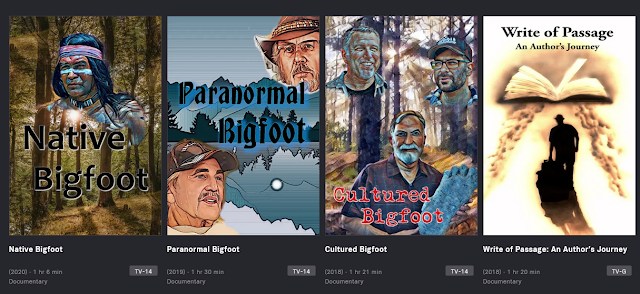
Available on Tubi TV - Watch for Free


 Posts
Posts


0 Comments:
Post a Comment